
Websites · Field notes · 6 min read · By Alexander Bishop
Service area pages and city pages are not the same thing
Contractors mix these up constantly. A service area page explains where you work; a city page targets a specific place. Here is which one earns its keep.
The two pages do different jobs
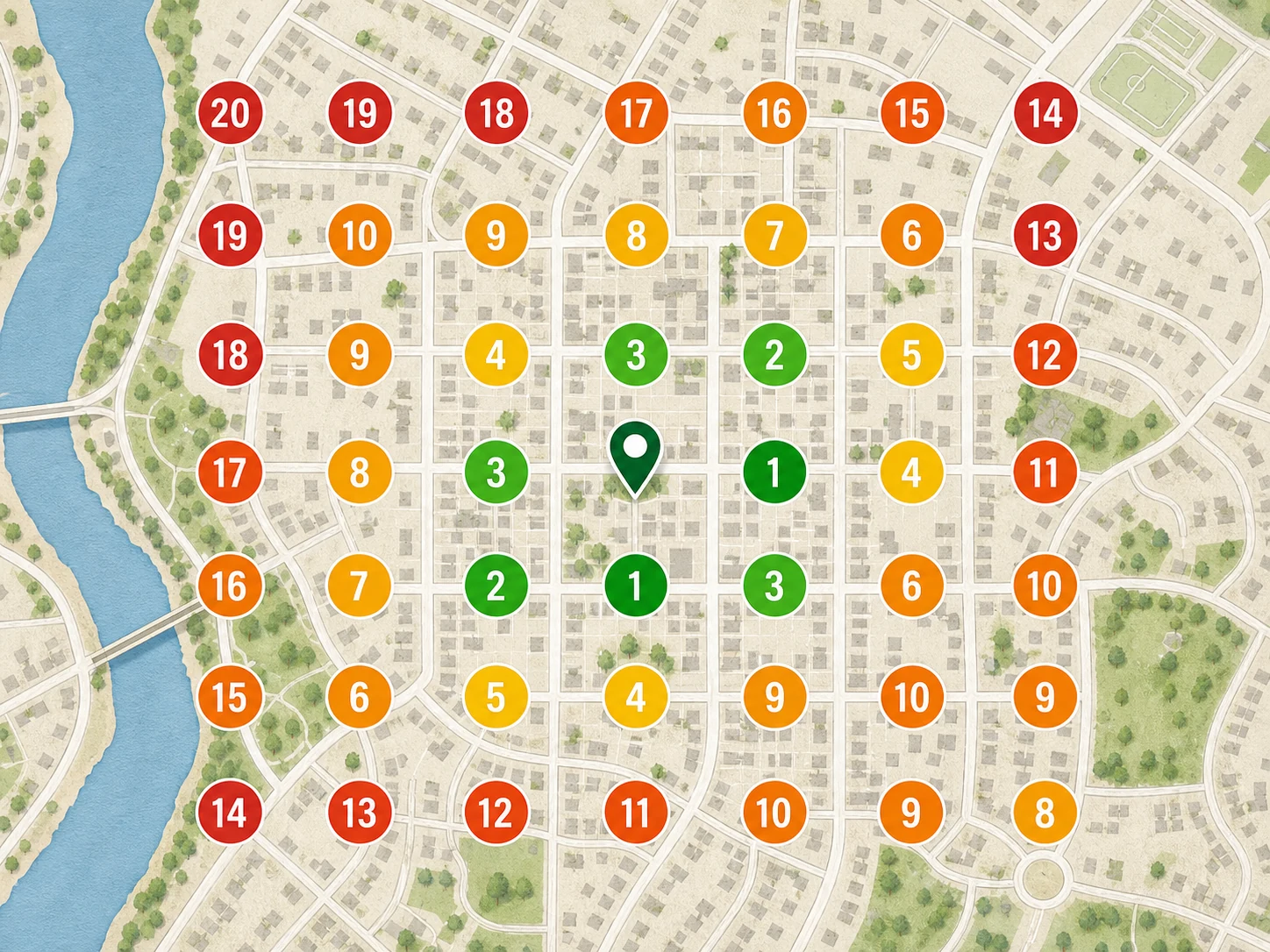
The confusion starts because both pages mention location, so contractors treat them as the same thing. They are not. A service area page explains, in general terms, where the business works. It might list a region, a set of towns, or a radius around the home base, and its job is to answer a homeowner’s basic question: “Do you come to my town?” A city page is narrower and deeper. It targets a single place and tries to speak specifically to customers and searches in that city.
Most local service businesses need at least one clear service area page. Not every business needs a stack of city pages. The mistake is building dozens of city pages when one honest service area page would do the job better, or skipping the service area page entirely and hoping a pile of thin town pages carries the location signal. Knowing which page solves which problem prevents both errors.
When a service area page is enough
A service area page is the right starting point for almost every contractor. It names the region, lists the main towns or neighborhoods served, explains any travel or coverage limits, and reassures the homeowner that the business actually works where they live. For a company that covers a compact area and does not need to fight for ranking in every individual town, one strong service area page attached to solid service pages can carry the location work on its own.
The page should read like a person wrote it. A short explanation of where you are based, how far you travel, which towns you know well, and any areas you do not cover is more useful than a bulleted list of forty ZIP codes. Google and homeowners are both looking for a real business serving a real area, not a directory. Done well, a single service area page handles most of the local intent the business will ever attract.
When a city page actually earns its place
A city page is worth building when three things are true. You genuinely work in that city on a regular basis. You know something specific about it—the neighborhoods, the housing stock, the common problems, the permits, the local conditions. And you have something real to show, like completed jobs, reviews from customers there, or a genuine reason the location matters to the work. Under those conditions, the page practically writes itself, because it is just the truth.
When those conditions are not met, a city page becomes a liability. Swapping the city name into the same paragraph forty times is thin content, and modern search and AI systems are good at spotting it. A page that says nothing specific about the city gives Google nothing useful to surface and gives the homeowner no reason to call. If you cannot write a unique, useful page about a city without filler, you do not need a page for that city yet.
How they fit with service pages
Location pages work alongside service pages, not instead of them. The strongest local sites have clear pages for each major service—water heater repair, roof replacement, AC installation—and clear location information for where those services are offered. A service page explains what you do. A service area or city page explains where. Together they answer the two questions a homeowner actually asks: “Do you do this work?” and “Do you do it where I live?”
Avoid letting the structure get tangled. A page for every service in every city in the state quickly becomes hundreds of near-identical pages that nobody maintains. A smaller number of strong service pages, one solid service area page, and city pages only where the work justifies them is a cleaner, more effective setup. Quality and specificity beat quantity every time, especially as search systems get better at ignoring templated content.
The shortcut that is not a shortcut
Generating a city page for every town in the state, or scraping competitor pages and swapping in your name, used to sort-of work a decade ago. It does not move the needle now, and it can pull a decent site down. Thin and duplicate pages dilute the site, waste the owner’s time, and increasingly get filtered out by search and AI systems that recognize templated text. The shortcut creates more cleanup work later, not less.
The real move is to invest location content where it pays. Build one honest service area page. Add city pages for the places that send you good jobs and where you have real, specific things to say. Keep every page current instead of publishing it once and forgetting it. Fewer, stronger pages hold up across search changes and convert better when homeowners actually land on them.