
Websites · Field notes · 7 min read · By Alexander Bishop
Do city pages actually help you win near me searches?
City and location pages can win real "near me" searches—or they can be thin spam that drags your site down. Here is how to tell the difference.
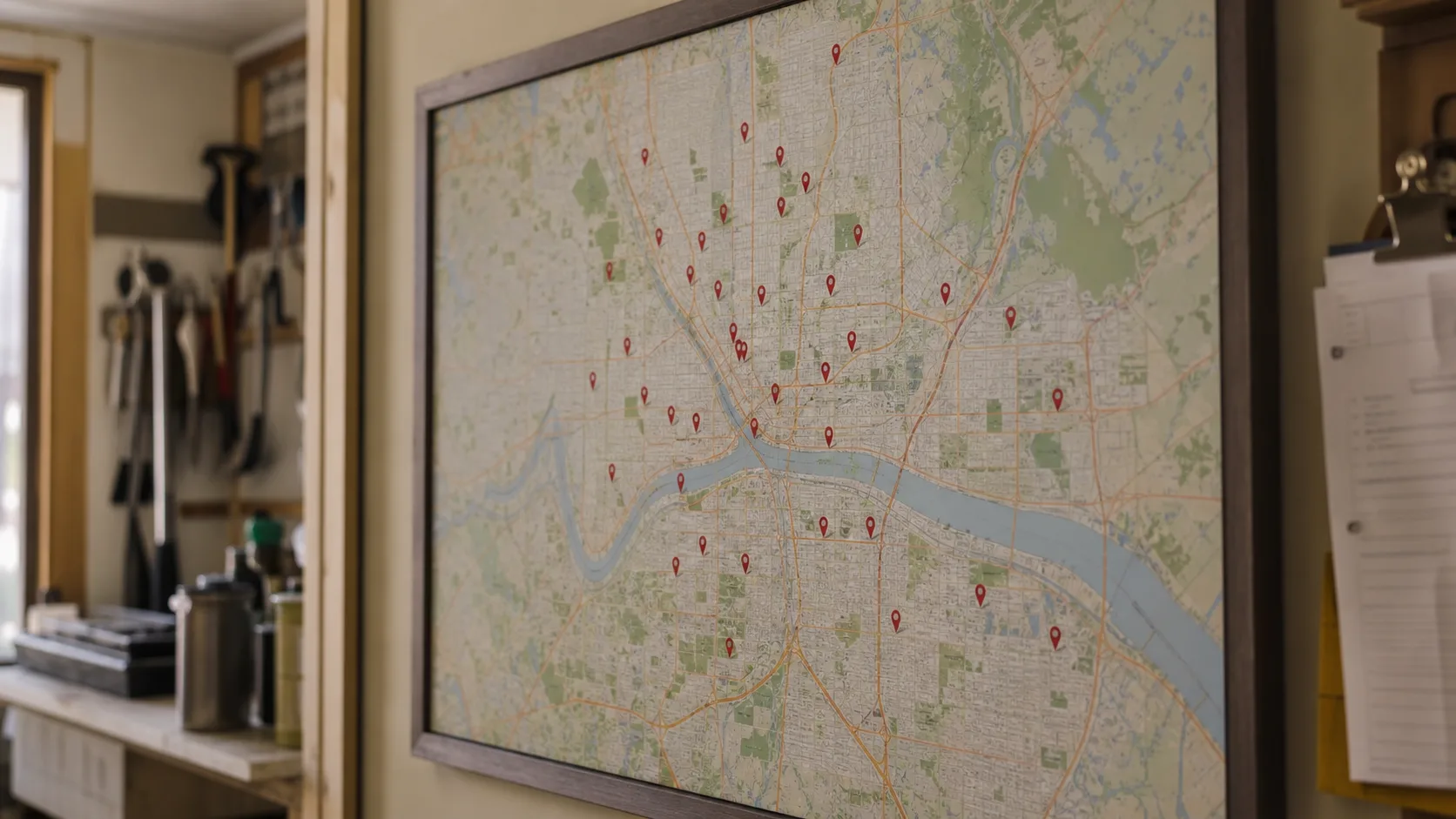
Why "near me" is the search that pays
When a homeowner types "plumber near me" or "roofing company Spokane," they are not researching. They have a problem and they want someone local to fix it. That is the search that turns into a call. It is also the search contractors most want to win, which is why the advice "build a page for every city" became so common.
The instinct is right. Location signals help. The problem is the execution. Most contractors end up with a folder full of near-identical pages where only the city name changes. That used to sort-of work. In 2026, with AI search paying close attention to whether content is actually useful, it is actively a liability.
When a city page is worth building
A city page earns its place when you can make it genuinely useful. That usually means three things are true. First, you actually work in that city regularly. Second, you know something specific about it: the neighborhoods, the building types, the common problems, the permits, the weather, the codes. Third, you have something real to show, like completed jobs, reviews from customers there, or a reason the location matters to the work.
When those conditions are met, the page is easy to write because it is just the truth. You describe the service in that city, mention the areas you cover, show real proof, and answer the questions a homeowner there would actually ask. That page ranks because it helps Google and a real reader at the same time. It also survives AI search, which has gotten good at ignoring filler.
When a city page is wasted effort
If the only difference between your Spokane page and your Pullman page is the word swapped into the same paragraph, you have not built two pages. You have built one page twice. Google calls this thin content, and it does not help. It dilutes the site, wastes your time, and increasingly gets ignored or filtered by AI systems that can spot templated text instantly.
The same goes for listing fifty towns in the footer, generating a page for every ZIP code in the state, or scraping competitor pages and swapping in your name. These tricks worked well enough a decade ago to become internet folklore. They do not move the needle now, and they can pull a decent site down.
A better approach: service-area pages with real depth
For most contractors, the strongest play is a smaller number of genuinely useful location pages backed by clear service pages. Start with one solid page per major service. Then add location detail where you actually have it: the city, the specific neighborhoods, the kinds of jobs, the local proof. Quality beats quantity every time.
If you serve a broad area, a well-written service-area page that explains the towns you cover and why can outperform a stack of empty city pages. Save the dedicated city page for the places where you have real, specific things to say. A handful of strong pages built around real work will hold up across search layout changes, AI overviews, and whatever comes next.
How this connects to the rest of local SEO
City pages are one piece of the local system, not a standalone tactic. They work best when the Google Business Profile is accurate, the NAP information matches everywhere, and the site loads fast on a phone. A useful city page attached to a messy profile still struggles. A clean profile attached to a site full of thin pages still struggles.
If you are going to invest in location content, do it where it pays. Pick the towns that actually send you good jobs. Write the page a homeowner in that town would find helpful. Show real proof. Then keep the page current instead of publishing it once and forgetting it exists.